By Corey McWhinnie
9th November, 2014
The white van hurtles along the dry bitumen. On either side of the pot holed road are endless paddocks, fields of yellow, purple, green and others the colour and texture of instant coffee. Trees are sparse, providing limited shade for the thirsty livestock that stand motionless, dazed by the sun. Flies agitate the horses ears, making them twitch back and forth with their tails swishing and flicking in time, the only movement that breaks the heavy catatonic atmosphere.
Jim knows these country roads like the back of his gigantic, rough, tradesman’s hands, yet he drives along alert and cautious. On a clear day like this clouds form striations, streaking across the big, open blue sky. The road shimmers making it seem as if the dark sticky tar is a wet cool stream flowing in front of you. The car windscreen is a graveyard for insects, caught in flight, their beautiful wings, translucent and fragile, are now crushed against the tempered glass. They are a nightmare to wash off and any attempt at using the windscreen wipers ends with insect bodies being smeared from side to side like a Jackson Pollock mural.
Inside the van the air conditioner is whirring away gently, in harmony with the grind of the turbo diesel engine which has plenty of torque to combat steep rocky gradients with a payload of equipment. The cabin temperature is cool if not cold. Jim offers a scratchy woollen blanket to throw over my knees seeing that I am shivering slightly but not daring to touch the temperature control which I am told has been araldited to 17 degrees anyway.
As I look around the van I note how functional it is and comfortable. There are boxes of tools, mechanical gadgets stuck to every available surface, various wheelchair parts assembled in neat piles and I notice rolls and rolls of velcro. On one of the cabin walls I see that Jim has glued a couple of very pretty, plastic butterflies, and on the dashboard a wooden green duck has been velcroed in place, redolent of a figurehead from a Spanish galleon.
On top of the middle console is a pile of manilla folders. Each is a different colour and has a name handwritten in large text across the top. There are three in total and each are bound in a large elastic band. These files Jim explains contain information on the clients we will be visiting today- families Jim has known, supported and cared for, for a major part of their lives. All clients live in the Central West NSW and all have profound disabilities.
The top green folder Jim says contains details on our first client, Katie who is 30 years old and has cerebral palsy. He will be visiting her today to make some adjustments to her chair including new inserts and covers, general maintenance and to install a battery operated fan to the back of her chair, an idea of Jim’s, that will encourage airflow and help reduce heat around her back.
The client notes have been meticulously recorded since Jim’s first consultation with Katie and her family. Before each consultation Jim reviews the files and makes note of the different needs of each client. Because of the complexity of each case, special attention needs to be paid to structural changes in the way that the client is growing. All clients are in specialised wheelchairs that support their growth. For some, their bodies have not developed past that of a 12 year old.
The files are bulky and have reams of paper based notes, photos of various seating positions, and assessments from other health professionals that work as a team with Jim including occupational therapists and physiotherapists. What is also essential is an understanding of the family dynamic, the local support networks and an understanding of rural and remote health services, as well an intimate knowledge of the challenges and joys associated with living in the bush.
Jim has been working as a seating specialist for almost 40 years. He knows the clients well and in many cases is treated as part of the family, such is the respect that is shown for the support he has provided over this time. He used to run a clinic in Bathurst that was publicly funded, and during this time patients used to travel to the clinic to be seen. This would mean for many families time off work and time taken out of daily routines, sometimes just for simple maintenance requests.
Those days are now gone, with the clinic’s funding being reallocated to other services. Jim is now a private practitioner and part of his service is conducting home visits to areas covering Bathurst to Newcastle, Canberra, Sydney and out to areas of remote western NSW. Today I have been invited along on Jim’s regular regional run. We are visiting families in Parkes and Forbes, a six hour round trip from Bathurst. This makes for a twelve hour day, typical for Jim.
The single lane road we are traversing en-route to Forbes, runs through the township of Cudal a name which is said to be derived from an Aboriginal word meaning flat. It is mid-morning by the time we stop for coffee. On the side of the wide desolate road, an elderly woman is waiting to cross, cautiously glancing from side to side, as if she were about to step out onto a bustling Bangkok city street. The van crawls to a halt, kicking up a cloud of dust and as we open both doors and step down onto the street, we are ambushed by flies, that stick to our backs like molasses drenched raisins.
Turning the handle on the creaky fly screen, we enter the snack bar, the only place open in town. The low hanging ceiling fan is gyrating lethargically and as we approach the brown laminated counter our feet make squelching noises on the sticky lino floor. On the counter are glass jars of once fresh and juicy “Allen’s snakes,” faded lolly pops and a milk shake maker with the remnants of a malt drink still dripping off the dull stainless steel blades. Wiping her hands on her skirt front, the young assistant walks into the shop from behind a stall, pulling her hair into a pony-tail and says “What do you want?” We order our coffee, and once firmly cradled in our hands we make haste to the van.
According to a local sign Cudal is home to 389 people, and as we drive through I notice the services and facilities available including a small public school, show-ground, public swimming pool, an airport, caravan park with one lone tenant, a news-agency, one GP, a post-office, police station, a Country Women’s Association and three churches.
Pulling into Forbes, I am reminded of what explorer John Oxley said when he passed through this area in 1817, “It is impossible to imagine a worse country”. He thought the region was inhospitable, he was referring to the clay soil, inferior timber and murky swamps. But this area was gold country and in the first two years of the gold rush more than 8000 kilogrammes of the prized rock was shovelled out of the ground. Built along the banks of the Lachlan river Forbes today is a rich cultural community with over 7000 residents,. Many of the original buildings have been restored to their heritage glory with a hub of cafes, pubs, butchers and bakers abounding.
Before we head to Katie’s home, at least 20kms out of town, Jim pulls up in the main street to buy a cake for morning tea from one of the restored bakeries. “Never arrive empty handed” says Jim. “The time to talk and spend time with the family is just as important as the physical assessment itself.”
We navigate through the straight blocks in town, and onto the back roads leading us to Katie’s address. We turn off the bitumen and onto a windy dirt track, then turn into a quiet driveway and along to a house that is surrounded with sheds, paddocks full of sheep and farming machinery. As the van pulls in dogs start barking, chooks scatter across the front yard and an old man peers out from underneath the front verandah. Another man walks towards Jim smiling and offering a hand shake. “G’day Jim” says Steven, and is joined by Barbara, a tall sturdy looking woman, who as soon as she sees us arrive, breaks into hearty conversation and ushers us warmly inside.
Inside their home two children are seated around a large slow combustion fire place, even on a hot day like today the fire is on, and an old woman is quietly sitting nearby. The grand parents are visiting and it appears to be a whole family affair to greet Jim on his rounds. Everyone sits around the kitchen table, the cake is cut and handed out and scalding hot coffee is served in large mugs.
Katie is the last to arrive. She has been attending a day care service. The family surround her and there is much hugging, smiling and laughter. Katie is tall and slim, with long brown hair. She has never spoken or been able to walk. She sits comfortably in her chair. Her frame is contorted but strong, her hands formed into hardened hooks and whilst not being able to verbalise her emotions, they are visibly clear through her expressions and body movements.
Over coffee, her parents Barbara and Steven discuss how their family business is going and how they are managing family affairs. Both work full time and are also full time carers for Katie. As a secondary income Steven sells firewood, and a large part of his work entails chopping and stacking ironbark, which is hard manual, physical work. His eldest daughter Rachel helps him with this part of the business. The households functions well and each member of the family contributes their fair share.
The family knows that Jim is due for retirement in a few years time and the question on everyone’s lips is what is going to happen to them when he does. Currently Jim is the only specialised seating provider in the region and when he leaves there will be an even bigger gap in service delivery than currently experienced.
For Katie and dozens of families like hers in the Central West, this may have a devastating impact on their life. Barbara asks “Will companies in Sydney be prepared to send teams out to these areas? If they do will they have the knowledge and the history of our family to do the work you do? Jim, even if the disability scheme is rolled out, will it make a difference to us if there are no services to access? Will they bring cake Jim…?”
The patient centred National Disability Insurance Scheme have just released their annual report for 2014 where it states that their main goal is, “Optimising social and economic independence and full participation for people with a disability”, where one of the prime aims to “provide more control and choice for people with a disability”. This scheme is a major achievement for the government and has been heralded as important as Medicare.
For families like Katie’s, the scheme will provide a flexible financial package which average out at approximately $35,000 per annum that can be tailored to their individual needs. Being able to afford a carer part time for Katie is essential, as is support with transport costs, specialists fees, mobility equipment and domestic assistance. This scheme which is currently in a pilot phase is due to be rolled out in 2015.
Yet one wonders if the scheme will actually address the difficulties that Katie’s family has identified. The tyranny of distance for instance is a long standing issue in Australia where NSW Health for example recognise that “people living in rural or remote areas face unique health challenges such as physical isolation, more limited access to health services and higher risk of injury”. Given the distances involved especially for people with disability federal initiatives such as eHealth are gaining some interest in rural and remote areas as a potential solution to address access to services utilising IT infrastructure.
In contrast the National Rural Health Alliance recently released a report on equity and access to services for people living with a disability in rural and remote Australia where is found that one of the fundamental elements is ensuring that there is access to local health professionals who have an intimate knowledge of the region, and understanding of the rural way of life.
It is precisely 6.52pm when we arrive back at home. Jim moves straight out to the custom built workshop to write up notes, and get preparations in order for the next days trip to Newcastle. Jim explains that every aspect of his business is made to order, except the wheelchair itself. He used to make these too, at the public clinic, but now he concentrates on the specialised moulds that are designed to fit the wheelchairs the client already owns. This keeps costs down for the client as instead of having to upgrade the chair as the child grows, the mould is instead adapted to suit.
Jim sews all of the inserts and covers by hand. Once the specialised mould, covers and cushions are complete, Jim then returns to the clients home to fit the mould in position. The mould works as a support for the client, to ensure they are properly seated and that structurally their body will grow appropriately, without further deformity.
Jim shows me a mould he is currently working on. “You know, I have been looking after this client for longer than you have been alive. Many OTs that do their rural placement in the Central West will only ever know their clients for two maybe three years. They can’t comprehend what it would be like to have an ongoing relationship with a client for that long. For some therapists the work is very short term”.
Jim does have a team of OTs he has worked with for many years. “We all used to have morning tea together every day and talk about life or whatever happened to be on our minds. I loved those days, I was the only man in the clinic and I did the sewing!”
I pick up a CD that is sitting on the bench, and Jim’s eyes light up. “That is the band I was in called Collector. We sourced the music from locals then played these songs that have been handed down through the generations from families in the Central West”. Many of the tunes are about bushrangers, the gold rush and life in the bush. Jim says “I have given a lot of these CDs to the families living in the Central West that I support. It is our history”.
Delivering health care services in rural and remote NSW is complex, difficult, oft fragmented and poorly coordinated. Local, state and federal governments are trying to address the tyranny of distance, access to specialist services and are using technology to try to address this gap. The end of an era is nigh. When Jim finally retires, he will leave behind a legacy that will be very difficult to match. His service is personal, Jim is part of the model of care, he brings his personality, philosophy and wealth of experience to everything he does. He says “Without giving a part of yourself, how can you expect others to open up and trust each other. That is the essence of building and sustaining a caring relationship”.
As I get ready to leave Jim turns to me and says “You know, I have been looking after the son’s and daughter’s of all these families for over 30 years. Today was the first time in my working life, that some of these families got to meet my daughter”.
References
NSW Health (2014) http://www.ehealth.nsw.gov.au/features/tackling_the_tyranny_of_distance
National Disability Insurance Scheme, Annual Report (2014) http://www.ndis.gov.au/sites/default/files/documents/annual_report_2013_2014.pdf
National Rural Health Alliance (2013) “Delivering equitable services to people living with a disability in rural and remote areas. http://ruralhealth.org.au/sites/default/files/documents/nrha-policy-document/submissions/sub-ndis-pdf-final-report-07-jun-13.pdf
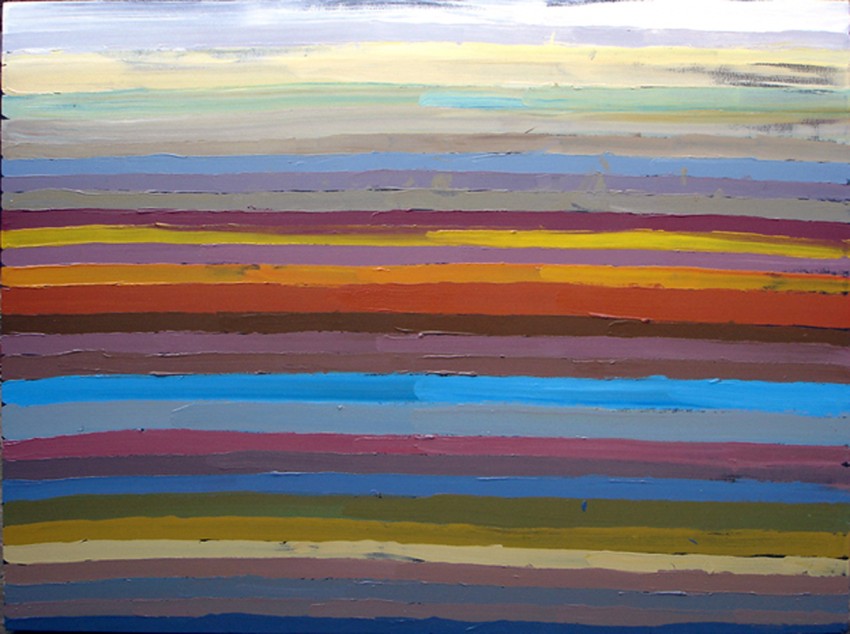
image source: http://roberthabel.com.au/works/south-australia